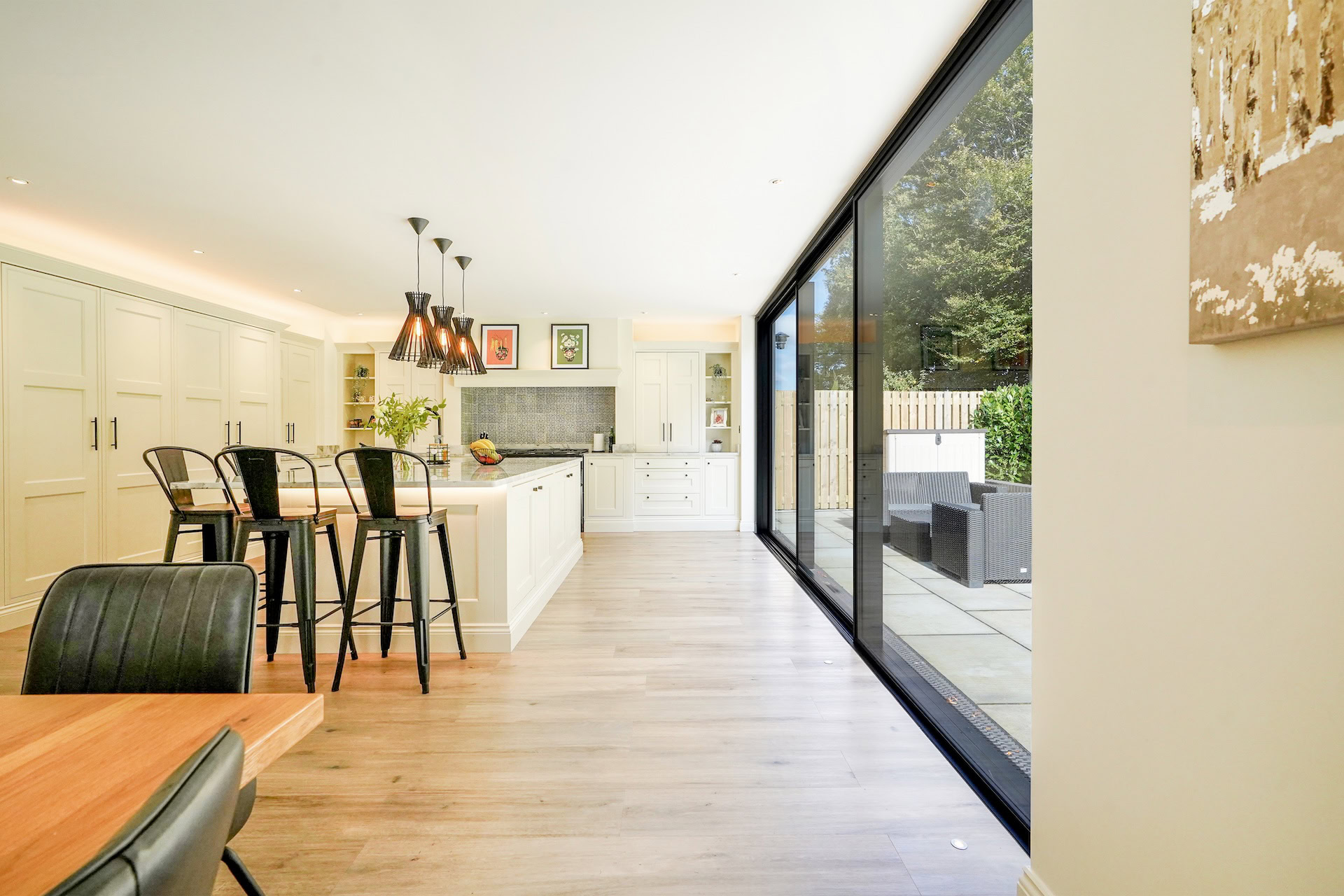
At CODA Bespoke, we work with homeowners who want more than just extra square footage. They want a home that feels considered, elegant and tailored to the way they live. A well-designed wraparound extension can do exactly that, creating space for cooking, dining, entertaining and everyday family life while improving the relationship between the house and garden.
In this guide, we explain what a wraparound extension is, why it is so popular, what to think about before starting, and how the right architectural approach can help you get the very best result.
A wraparound extension combines a rear extension with a side extension to form an L-shaped addition around the back corner of the house. It is most often seen on detached, semi-detached and period homes where the existing footprint leaves underused space to the side and rear.
This type of extension is especially popular because it can change both the size and shape of the ground floor. Rather than simply adding one more room, it gives you the chance to rethink the overall layout of your home and create something far more cohesive.
For example, a wraparound extension might allow you to:
Many older homes have generous plots but relatively enclosed ground floor layouts. Small kitchens, separate dining rooms and dark side returns can leave the house feeling disconnected from modern family life. A wraparound extension helps resolve these issues in a single move.
One of the biggest attractions is flexibility. Unlike a straightforward rear extension, a wraparound design allows the internal plan to be reshaped much more dramatically. This means the project is not just about adding area. It is about improving how the whole house works.
That is why this type of extension appeals to homeowners looking for a long-term investment in their lifestyle as well as their property. A beautifully designed scheme can make everyday living easier, more comfortable and more sociable.
The best wraparound extensions do not feel like add-ons. They feel completely integrated with the home. Achieving that takes more than simply drawing a bigger footprint. It requires careful thinking about proportion, layout, materials, roof form, glazing and how the old and new spaces connect.
At CODA Bespoke’s architectural design and delivery service, this is where the real value of professional design comes in. Every decision should support the way you want to live, while also respecting the character of the property and the wider setting.
Some of the key ingredients of a successful wraparound extension include:
One of the biggest mistakes in extension design is focusing only on area. More square footage does not automatically mean a better home. In fact, poorly planned extra space can feel underwhelming, especially if the layout lacks clarity or the room feels too wide, too deep or badly lit.
A wraparound extension should improve the quality of space as much as the quantity of it. This may involve opening up the ground floor, introducing carefully positioned rooflights, framing views to the garden, or zoning the space so that each area has its own purpose without feeling boxed in.
For some homeowners, that might mean a dramatic open plan kitchen with a long island and dining area. For others, it could mean combining open living with quieter secondary spaces such as a snug, study area or utility room tucked neatly behind the main entertaining space.
Good architecture balances openness with comfort. That is often what turns a large extension into a home that genuinely feels better to live in.
Whether a wraparound extension needs planning permission depends on the property and the scope of the proposal. Some smaller extensions may fall within permitted development, but many wraparound schemes require a formal planning application because of their size, width, height or relationship to boundaries.
This is one reason why it helps to work with an experienced practice early. At CODA, our process is designed to guide projects from the initial brief through design development, planning, technical detailing and delivery.
When considering a wraparound extension, the design team will typically assess:
If you are still weighing up the value of appointing an architect, this guide on whether you need an architect for an extension is also worth reading.
Luxury in residential architecture is rarely about excess. More often, it comes from thoughtful detailing, proportion, light and how seamlessly a space supports daily life. A wraparound extension can become one of the most impressive parts of a home when these details are handled well.
Features that can elevate the finished result include:
The goal is not simply to make the extension look contemporary. It is to create a home that feels calm, resolved and highly individual.
If you are considering this kind of project, it helps to look at built examples and think beyond generic inspiration. CODA’s projects showcase a range of homes where careful design has transformed the way people live.
You may also want to explore projects such as Carter Knowle Road, Sheffield, an extension and refurbishment project, or Tom Lane, Fulwood for further inspiration on how bespoke residential architecture can reshape a home.
Looking at real projects can help you identify what matters most to you, whether that is openness, natural materials, privacy, a stronger garden connection or a more dramatic entertaining space.
A wraparound extension can be an exceptional option if your current layout feels cramped, fragmented or disconnected from the garden. It is especially effective where there is unused side access or a side return that could be absorbed into the new design.
It may be right for your home if you want to:
Every property is different, so the best starting point is a design conversation based on your home, your priorities and the opportunities the site presents.
A wraparound extension has the potential to do far more than enlarge a house. Done well, it can completely reshape the experience of living there, bringing together light, flow, function and character in a way that feels natural and lasting.
If you are planning a renovation and want to explore what is possible, contact CODA Bespoke to start the conversation. With a tailored, design-led approach and experience across luxury residential projects, we help homeowners create spaces that are not only beautiful, but deeply connected to the way they live.